
Project Overview
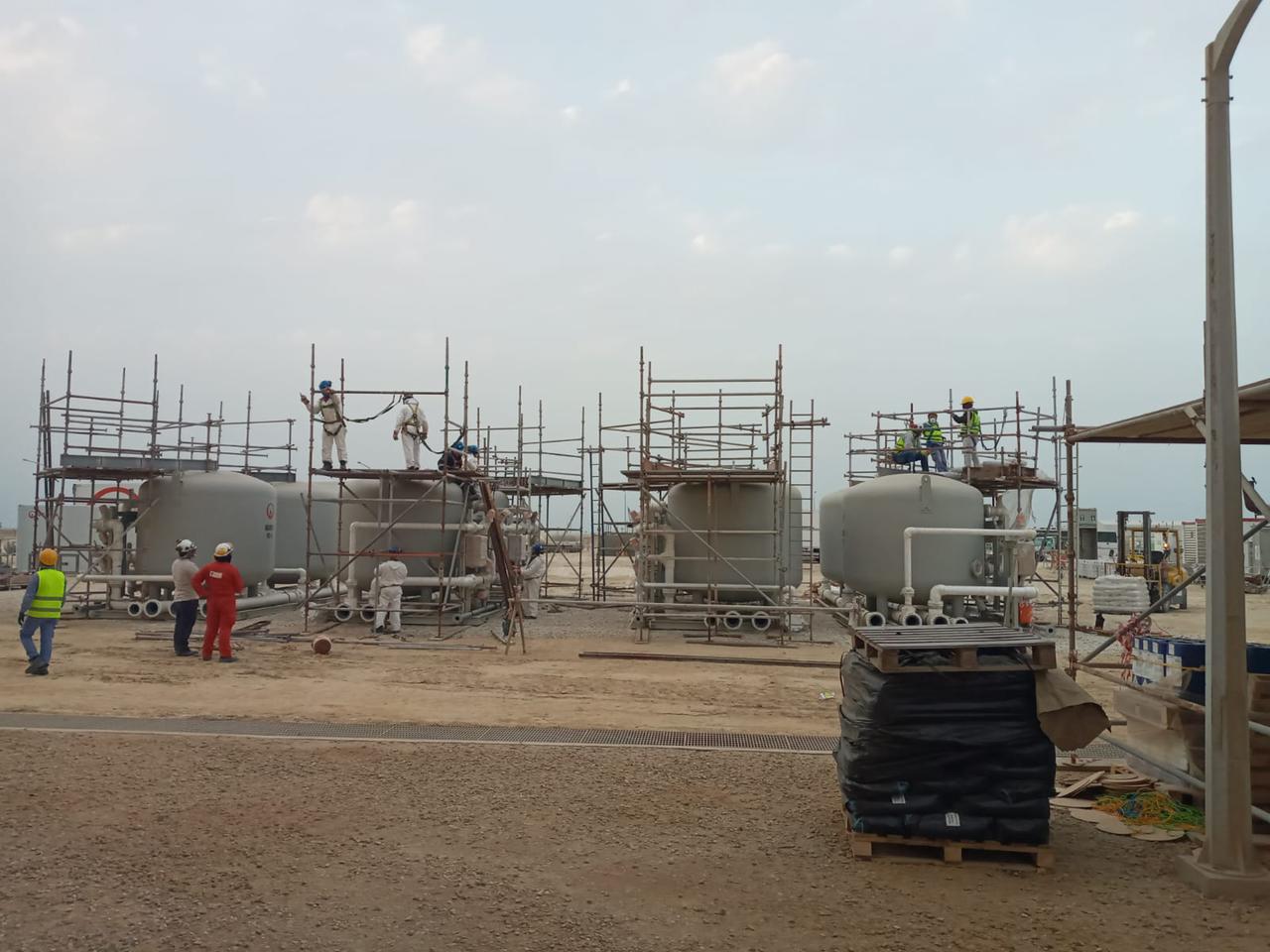
This critical infrastructure project involves the rapid deployment and installation of a massive 45,000 m³/day temporary desalination facility at AMAALA, one of Saudi Arabia's premier ultra-luxury giga-projects. Executed by Veolia Assets, the plant utilizes a combination of Seawater Reverse Osmosis (SWRO) and Brackish Water Reverse Osmosis (BWRO) technologies. The primary objective is to secure a reliable, high-capacity supply of potable and utility water to support the extensive early-stage construction activities and initial operational phases of the AMAALA destination, prior to the completion of its permanent utility networks.
Scope of Work
-
Intake & Pre-treatment Systems: Installation of raw seawater intake infrastructure and advanced pre-treatment filtration systems (such as Multi-Media Filters or Ultrafiltration) to remove suspended solids and protect the downstream RO membranes.
-
Modular Plant Installation: Assembling, positioning, and integrating high-capacity, skid-mounted SWRO and BWRO units, designed for rapid deployment and immediate high-yield water production.
-
High-Pressure Hydraulics: Fabrication and installation of specialized high-pressure piping (Duplex/Super Duplex stainless steel), heavy-duty feed pumps, and chemical dosing systems required for optimum desalination.
-
Electromechanical & Control Systems: Full electrical infrastructure setup, including Main Distribution Boards (MDBs) and Motor Control Centers (MCCs), integrated with a centralized SCADA system for automated, remote plant operation.
-
Testing, Commissioning & Handover: Comprehensive hydro-testing, system flushing, and performance validation of both SWRO and BWRO trains to ensure product water meets the strict quality parameters required by AMAALA before full-scale operation.
Technological Impact
Given AMAALA’s commitment to a zero-carbon footprint and the protection of the pristine Red Sea ecosystem, this project relies on highly advanced Energy Recovery Devices (ERDs). These devices capture hydraulic energy from the high-pressure reject brine and transfer it back to the feed water, drastically reducing the electrical power consumption of the SWRO process. Furthermore, the modular, plug-and-play architecture of the plant allows for a massive 45,000 m³/day output with a significantly reduced physical footprint and minimal environmental disruption to the surrounding coastal landscape.