
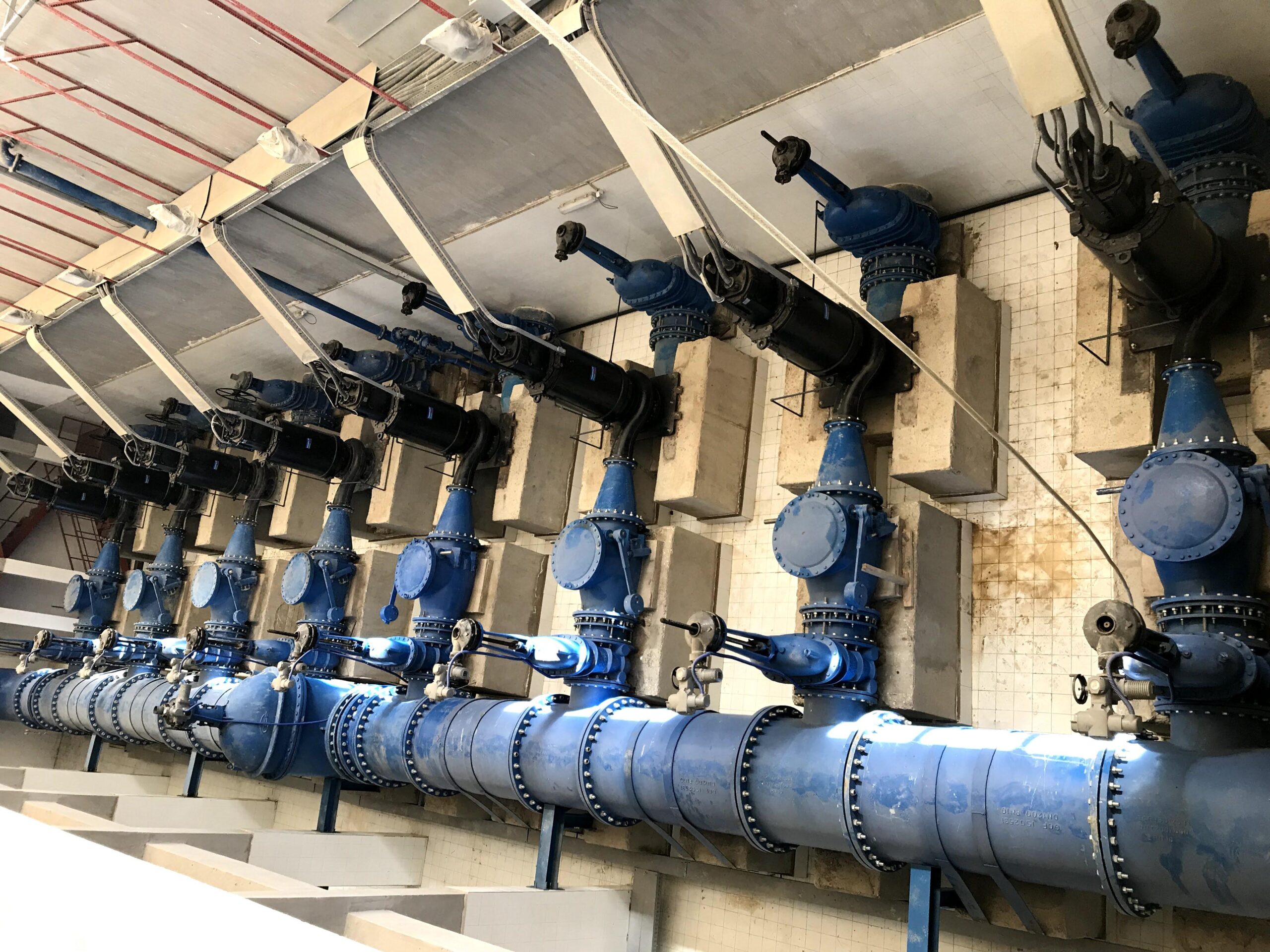
Project Overview
This project, undertaken for the New Urban Communities Authority, involves comprehensive operation, maintenance, and training services for water pumping stations, sewage pumping stations, oxidation ponds, and the 800 mm force main with a length of 5.4 km in Badr City. The project aims to ensure the continuous, efficient, and reliable operation of water and wastewater infrastructure while maintaining compliance with operational standards, environmental regulations, and sustainability requirements.
The project focuses on enhancing the performance and reliability of essential water and wastewater facilities through professional operation, preventive maintenance, corrective actions, and technical management practices. In addition to operation and maintenance activities, the project includes specialised training programmes to improve the capabilities of operation and maintenance personnel and ensure sustainable facility management in Badr City.
Scope of Work
The project encompasses complete operation, maintenance, and training activities for water pumping stations, sewage pumping stations, oxidation ponds, and the 800 mm force main, including:
- Continuous operation and monitoring of water pumping stations, sewage pumping stations, oxidation ponds, and associated facilities.
- Operation and maintenance of water pumping systems, including pumps, motors, valves, electrical panels, control systems, and auxiliary equipment.
- Operation and maintenance of sewage pumping stations, including wet wells, dry wells, pumping units, collection chambers, and related systems.
- Operation and maintenance of oxidation ponds, including inlet and outlet structures, treatment basins, hydraulic systems, and associated facilities.
- Operation, inspection, and maintenance of the 800 mm force main (5.4 km), including pipelines, valves, chambers, and hydraulic structures.
- Preventive, predictive, and corrective maintenance of mechanical, electrical, and electromechanical equipment.
- Monitoring water levels, flow rates, pressure readings, equipment performance, and operational parameters.
- Laboratory monitoring and analysis of wastewater quality to ensure effective treatment performance and compliance with environmental standards.
- Operation and maintenance of SCADA, instrumentation, automation, and control systems where applicable.
- Inspection, cleaning, and maintenance of tanks, pipelines, channels, valves, and related infrastructure.
- Emergency response, troubleshooting, and corrective actions to minimise operational interruptions.
- Spare parts management, equipment condition assessment, and replacement of deteriorated components.
- Developing and implementing technical training programmes for operation and maintenance personnel covering equipment operation, maintenance procedures, safety requirements, and best practices.
- Preparing operational reports, maintenance records, performance evaluations, and technical documentation according to New Urban Communities Authority requirements.
- Applying occupational health, safety, and environmental (HSE) standards throughout all project activities.