
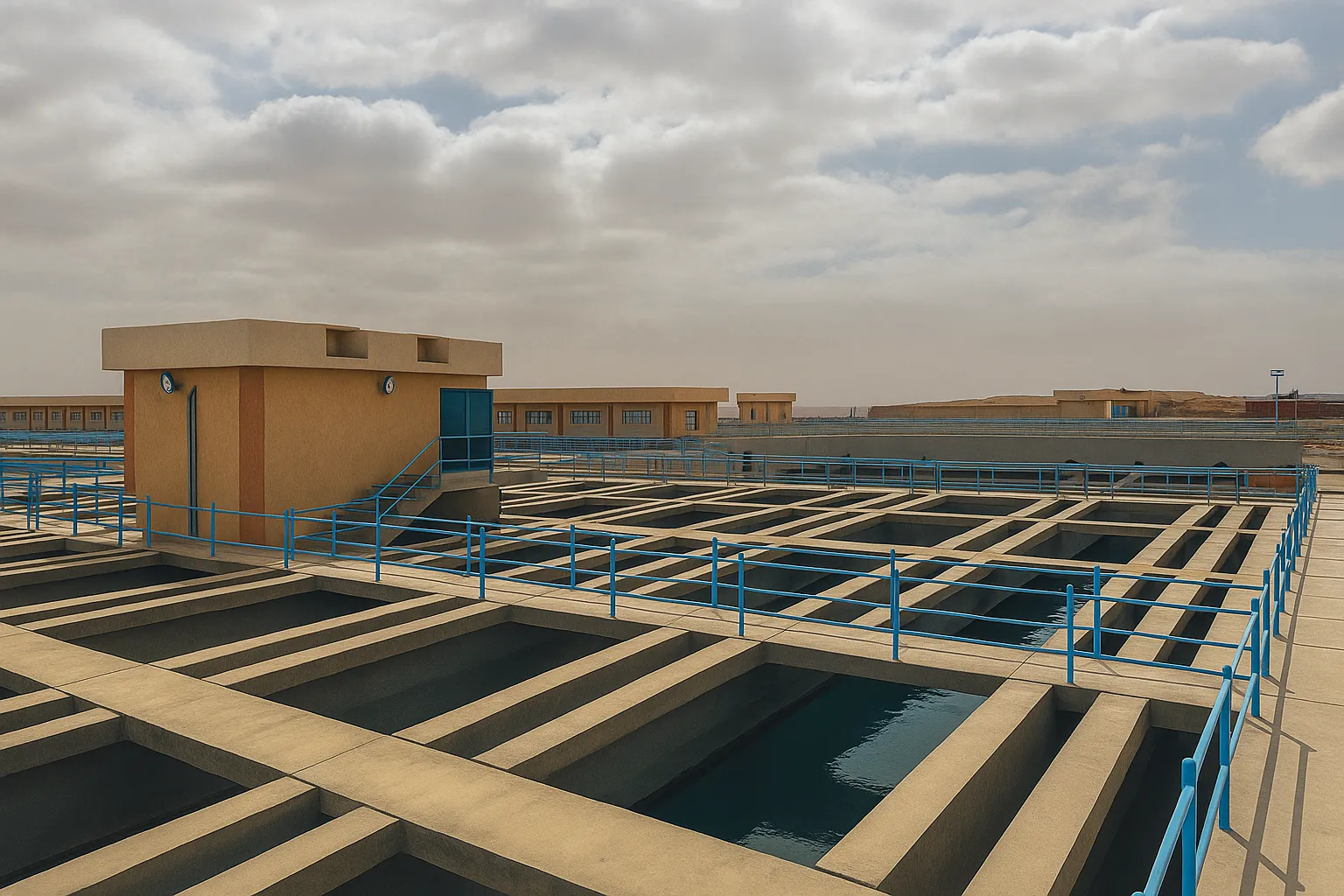
Project Overview
This vital municipal infrastructure project encompasses the comprehensive Operation and Maintenance (O&M) of the Main Sewage Pumping (Lifting) Station in Al Shorouk City. Executed on behalf of the New Urban Cities Authority (NUCA), the facility serves as the central hydraulic heart of the city's wastewater collection system. The primary objective is to ensure the continuous, safe, and efficient transfer of massive volumes of raw municipal sewage from the city's underground networks to the final wastewater treatment plants. Reliable operation of this main station is absolutely critical to preventing urban flooding, mitigating environmental hazards, and sustaining the high sanitation standards of Al Shorouk City.
Scope of Work
-
Continuous Pumping Operations: 24/7 management and monitoring of wet well levels, inflow rates, and discharge pressures to maintain uninterrupted hydraulic flow during both average daily loads and peak usage hours.
-
Heavy Electromechanical Maintenance: Systematic preventive and corrective maintenance of heavy-duty submersible and dry-pit sewage pumps, mechanical bar screens, grit removal classifiers, and large-scale isolation valves.
-
Backup Power & Emergency Readiness: Rigorous testing, maintenance, and operation of standby diesel generators and Uninterruptible Power Supply (UPS) systems to guarantee continuous pumping operations during sudden municipal power outages.
-
Electrical & Control Systems (E&I): Regular servicing and calibration of Motor Control Centers (MCCs), Variable Frequency Drives (VFDs), level sensors, and the centralized PLC/SCADA control panels.
-
Odor Control & HSE Compliance: Maintenance of ventilation and odor control units to ensure a safe working environment. Strict enforcement of Health, Safety, and Environment (HSE) protocols, particularly regarding hazardous gas monitoring and confined space entry procedures.
Technological Impact
The integration of Variable Frequency Drives (VFDs) coupled with ultrasonic wet-well level sensors is a game-changer for the station's efficiency. Instead of running massive pumps at full speed continuously, the VFDs dynamically adjust the pump motor speeds in real-time to match the exact inflow of sewage. This technology dramatically reduces the station's electrical consumption, minimizes hydraulic shocks (water hammer) on the rising main pipelines, and significantly extends the mechanical lifespan of the pump impellers. Furthermore, the centralized SCADA telemetry system provides remote visibility and automated alarms, allowing operators to preemptively address potential blockages or mechanical trips long before they result in environmentally disastrous overflows.